Heart problems often develop silently, and many people only notice symptoms when the condition becomes serious. That is why doctors use diagnostic tests such as ECG and stress tests to evaluate heart health and detect problems early.
Patients frequently search for ECG test Lahore or cardiac diagnostic tests when they experience symptoms like chest pain, irregular heartbeat, or shortness of breath. These tests help cardiologists understand how well the heart is functioning and whether there are signs of heart disease.
This guide explains how ECG and stress tests work, why they are recommended, and when you should consider getting these tests done.
What Is an ECG Test?
An ECG, also called an electrocardiogram, is a simple and painless test that records the electrical activity of the heart.
Every heartbeat is triggered by electrical signals. An ECG measures these signals and shows how fast the heart is beating and whether the rhythm is normal.
Doctors often recommend an ECG test Lahore for patients who have symptoms that may indicate heart disease.
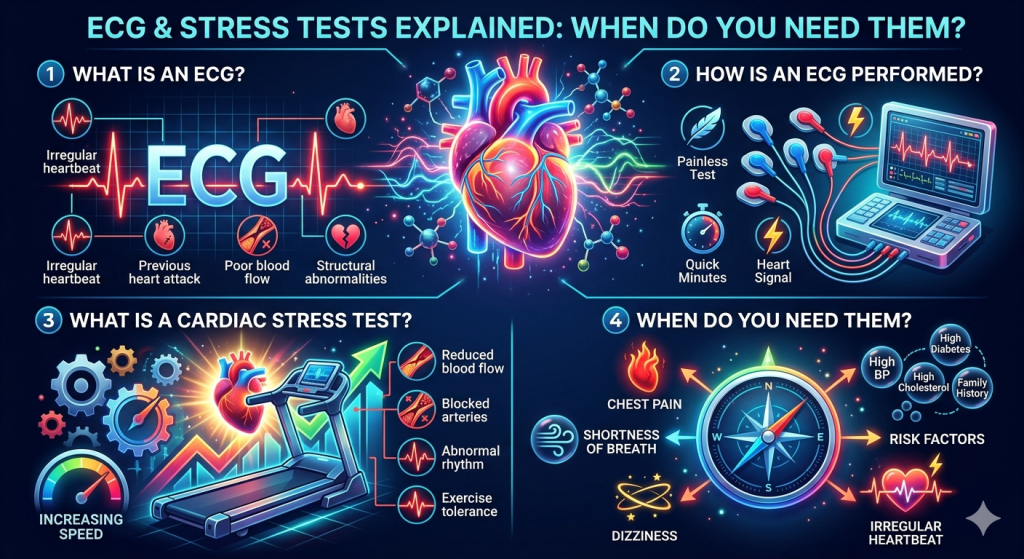
The test can help detect
• Irregular heartbeat (arrhythmia)
• Signs of a previous or ongoing heart attack
• Poor blood flow to the heart
• Structural heart abnormalities
An ECG test usually takes only a few minutes and does not require any special preparation.
How Is an ECG Test Performed?
During the test, small sticky sensors called electrodes are placed on the chest, arms, and legs. These sensors are connected to a machine that records the heart’s electrical signals.
The process typically includes
• The patient lies down comfortably
• Electrodes are placed on the skin
• The machine records heart signals for a few minutes
• The cardiologist analyzes the results
The procedure is completely painless and safe for patients of all ages.
What Is a Cardiac Stress Test?
A cardiac stress test evaluates how the heart performs during physical activity. Because the heart works harder during exercise, certain heart problems become easier to detect.
Doctors often recommend a cardiac stress test Pakistan when patients experience symptoms during physical activity, such as chest pain or shortness of breath.
The test helps identify
• Reduced blood flow to the heart
• Blocked coronary arteries
• Abnormal heart rhythm during exercise
• Exercise tolerance and heart performance
Stress tests are commonly used to diagnose coronary artery disease or assess the severity of existing heart conditions.
How a Stress Test Is Performed
Most stress tests involve walking on a treadmill or pedaling a stationary bicycle while the heart’s activity is monitored.
The procedure usually follows these steps
• Electrodes are attached to monitor heart rhythm
• The patient walks on a treadmill at gradually increasing speed
• Blood pressure and heart rate are monitored
• The test stops if symptoms appear or the target heart rate is reached
The entire process usually takes about 30 to 45 minutes.
What Is an Echocardiogram?
An echocardiogram is another common heart test that uses ultrasound waves to create images of the heart.
Many patients searching for echocardiogram near me Lahore want to evaluate the structure and function of their heart.
An echocardiogram helps doctors examine
• Heart chambers and valves
• Pumping strength of the heart
• Blood flow through the heart
• Structural abnormalities
Unlike an ECG, which records electrical activity, an echocardiogram provides visual images of the heart.
When Do You Need an ECG or Stress Test?
Cardiologists recommend these tests when patients experience symptoms that may indicate heart problems.
Common reasons include
• Chest pain or chest pressure
• Shortness of breath
• Dizziness or fainting
• Irregular heartbeat or palpitations
• Unexplained fatigue
Doctors may also recommend these tests for patients who have risk factors such as high blood pressure, diabetes, high cholesterol, or a family history of heart disease.
Regular diagnostic tests help detect problems early and prevent serious complications.
Who Should Get Regular Heart Tests?
Some individuals have a higher risk of developing heart disease and may benefit from routine cardiac testing.
People who should consider regular heart screening include
• Adults over the age of 40
• Patients with high blood pressure
• People with diabetes
• Individuals with high cholesterol levels
• Smokers
• People with a family history of heart disease
Early testing allows cardiologists to identify problems before symptoms become severe.
Are ECG and Stress Tests Safe?
Yes, both ECG and stress tests are safe and commonly performed diagnostic procedures.
An ECG test has no risks because it only records the heart’s electrical signals.
Stress tests are also generally safe, but they are always conducted under medical supervision. If a patient experiences discomfort or abnormal symptoms, the test is stopped immediately.
These tests provide valuable information that helps doctors make accurate diagnoses and plan effective treatment.
Why Early Heart Testing Is Important
Heart disease is one of the leading health concerns in Pakistan, but many cases can be prevented with early detection.
Diagnostic tests such as ECG, stress tests, and echocardiograms allow doctors to identify problems before they become life threatening.
Early diagnosis can help
• Prevent heart attacks
• Detect blocked arteries
• Monitor heart rhythm problems
• Guide proper treatment plans
Regular testing is especially important for people with existing risk factors.
Cardiac Diagnostic Tests in Lahore
If you are experiencing symptoms related to heart health, timely testing is essential. Diagnostic procedures such as ECG, stress tests, and echocardiograms help cardiologists evaluate heart function and detect early signs of disease.
Dr. Shoaib Sarwar Hashmi provides expert cardiac evaluation and diagnostic testing for patients with heart symptoms or risk factors.
Book your cardiac diagnostic tests today and take the first step toward protecting your heart health.
FAQ About ECG and Stress Tests
What does an ECG test detect?
An ECG detects abnormal heart rhythms, signs of heart attack, and other problems related to the heart’s electrical activity.
When should I get an ECG test?
You should consider an ECG test if you experience chest pain, dizziness, irregular heartbeat, or shortness of breath.
What is the difference between an ECG and a stress test?
An ECG measures the heart’s electrical activity while you are resting, whereas a stress test evaluates how the heart performs during physical activity.
Is a stress test painful?
No. A stress test usually involves walking on a treadmill while your heart activity is monitored. It is safe and generally comfortable for most patients.
How long does a stress test take?
A typical stress test takes about 30 to 45 minutes, including preparation and monitoring.
Book your cardiac diagnostic tests today to ensure your heart is functioning properly and to detect potential problems early.