Many people use the terms heart attack and cardiac arrest interchangeably, but they are not the same. Understanding the difference can save lives, especially in emergency situations where quick action is critical.
In Pakistan, lack of awareness often leads to delayed response during heart emergencies. Knowing the signs and what to do can help you protect yourself and your loved ones.
What Is a Heart Attack?
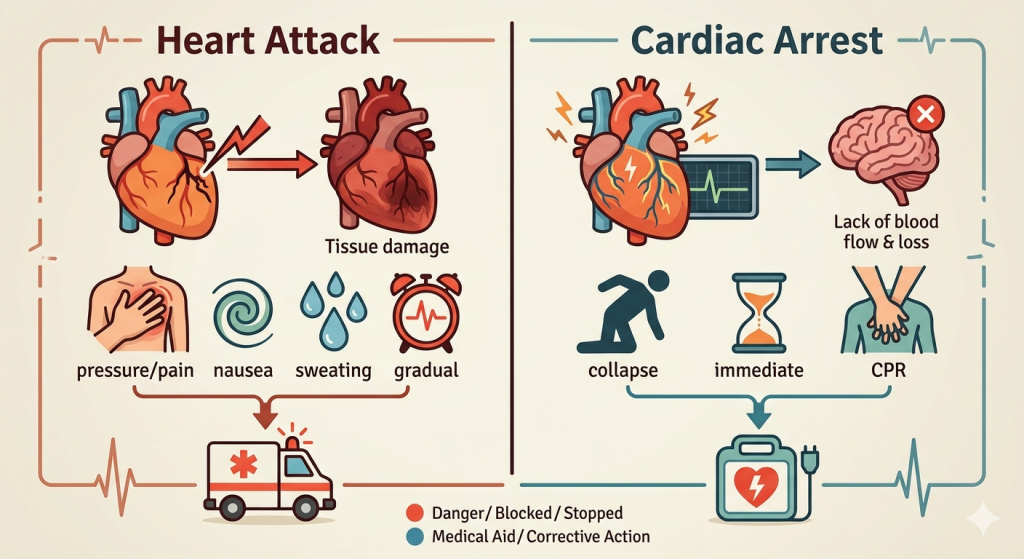
A heart attack occurs when blood flow to a part of the heart is blocked, usually due to a clot in the coronary arteries. This prevents oxygen from reaching the heart muscle, causing damage.
Heart attacks usually develop gradually and may give warning signs before becoming severe.
Common Symptoms of a Heart Attack
• Chest pain or pressure that may spread to the arm, jaw, or back
• Shortness of breath
• Nausea or vomiting
• Sweating or cold sweats
• Fatigue or dizziness
These symptoms may last for several minutes or come and go. Immediate medical attention is essential.
What Is Cardiac Arrest?
Cardiac arrest occurs when the heart suddenly stops beating due to an electrical problem. This stops blood flow to the brain and other vital organs.
Unlike a heart attack, cardiac arrest happens suddenly and without warning. It is a life-threatening emergency that requires immediate action.
Symptoms of Cardiac Arrest
• Sudden collapse
• No pulse
• No breathing
• Loss of consciousness
Without immediate treatment, cardiac arrest can lead to death within minutes.
Key Differences Between Heart Attack and Cardiac Arrest
Understanding the difference helps in responding correctly during an emergency.
• Heart attack is caused by a blockage in blood flow, while cardiac arrest is caused by an electrical malfunction
• Heart attack symptoms develop gradually, while cardiac arrest occurs suddenly
• A person having a heart attack is usually conscious, while cardiac arrest leads to immediate unconsciousness
• Heart attack requires urgent medical care, while cardiac arrest requires immediate CPR and emergency response
What to Do During a Heart Attack
If someone shows signs of a heart attack:
• Call emergency medical services immediately
• Help the person sit down and stay calm
• Loosen tight clothing
• Give aspirin if advised by a doctor
• Do not ignore symptoms or delay seeking help
Early treatment can prevent serious damage to the heart.
What to Do During Cardiac Arrest
Cardiac arrest requires immediate life-saving action:
• Call emergency services right away
• Start CPR immediately (push hard and fast in the center of the chest)
• If available, use an AED (automated external defibrillator)
• Continue CPR until medical help arrives
Quick response can double or even triple survival chances.
Why Early Awareness Matters
In Pakistan, many heart emergencies become fatal due to delayed recognition and response. Educating yourself and your family about these conditions can make a life-saving difference.
When to See a Cardiologist
You should consult a cardiologist if you experience:
• Frequent chest pain or discomfort
• Shortness of breath
• Irregular heartbeat
• High blood pressure or cholesterol
• Family history of heart disease
Regular checkups can help detect problems early and prevent emergencies.
Get Expert Heart Care
Understanding the difference between heart attack and cardiac arrest is the first step toward protecting your health. Early diagnosis, proper treatment, and lifestyle changes can reduce the risk of serious heart conditions.
Consult Dr. Shoaib Sarwar Hashmi for expert evaluation, diagnosis, and heart care in Lahore and Gujranwala.
FAQ About Heart Emergencies
Is a heart attack the same as cardiac arrest
No. A heart attack is caused by a blockage in blood flow, while cardiac arrest is caused by the heart suddenly stopping.
Can a heart attack lead to cardiac arrest
Yes. A severe heart attack can trigger cardiac arrest if not treated in time.
What is the first thing to do in cardiac arrest
Start CPR immediately and call emergency services.
Can heart attacks be prevented
Yes. A healthy lifestyle, regular checkups, and managing risk factors can reduce the risk.
Who is at risk of heart emergencies in Pakistan
People with high blood pressure, diabetes, obesity, smoking habits, or family history of heart disease are at higher risk.
Knowing what to do in a heart emergency can save lives. Stay aware, act quickly, and seek medical help without delay.