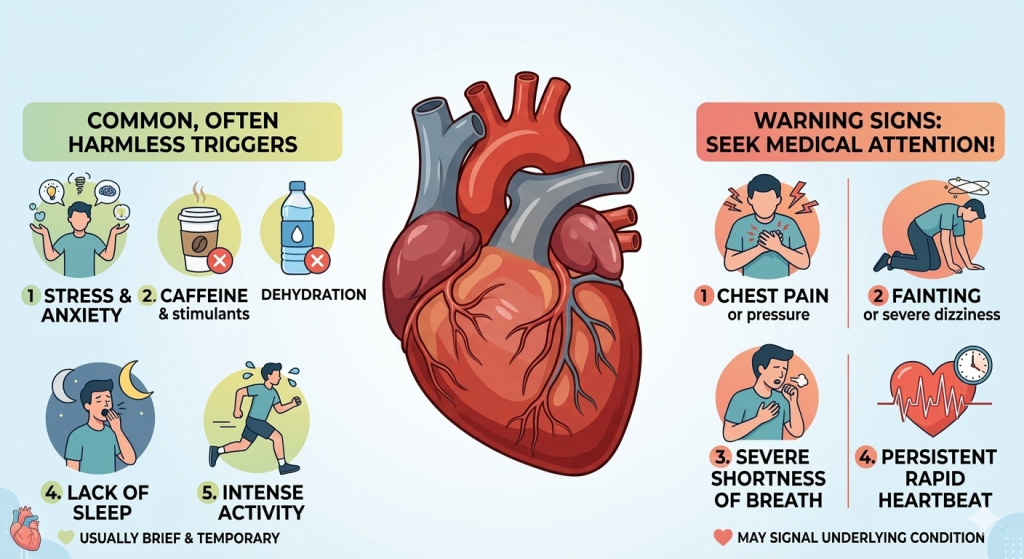
Heart palpitations are a common experience where a person suddenly becomes aware of their heartbeat. It may feel like the heart is racing, pounding, fluttering, or skipping beats. While palpitations can sometimes be harmless, they may also signal an underlying heart condition. According to Dr. Shoaib Sarwar Hashmi, understanding the cause of palpitations is important because some cases require medical attention.
What Are Heart Palpitations?
Heart palpitations occur when the rhythm of the heartbeat feels unusual or more noticeable than normal. Some people feel it in their chest, while others may notice the sensation in the throat or neck.
Dr. Shoaib Sarwar Hashmi explains that palpitations can happen due to temporary triggers such as stress, anxiety, caffeine intake, dehydration, or lack of sleep. In many cases, these episodes are brief and not dangerous. However, frequent or severe palpitations should always be evaluated by a cardiologist.
Common Causes of Heart Palpitations
There are several factors that can lead to heart palpitations. Some causes are harmless, while others may indicate heart rhythm problems.
Dr. Shoaib Sarwar Hashmi notes that common triggers include emotional stress, excessive caffeine consumption, smoking, dehydration, and intense physical activity. Medical conditions such as anemia, thyroid disorders, high blood pressure, and heart rhythm abnormalities can also lead to palpitations.
Certain medications, energy drinks, and stimulants may also affect heart rhythm and cause irregular heartbeats.
When Are Palpitations a Warning Sign?
Occasional palpitations that last only a few seconds are usually not a major concern. However, if palpitations occur frequently or are accompanied by other symptoms, medical evaluation becomes important.
Dr. Shoaib Sarwar Hashmi advises seeking medical help if palpitations are associated with chest pain, dizziness, fainting, severe shortness of breath, or persistent rapid heartbeat. These symptoms could indicate a serious heart rhythm disorder that requires immediate attention.
How Cardiologists Diagnose Palpitations
To determine the cause of palpitations, doctors may recommend several diagnostic tests. These tests help evaluate the electrical activity and structure of the heart.
Dr. Shoaib Sarwar Hashmi commonly recommends tests such as ECG, Holter monitoring, echocardiography, and blood tests to identify possible triggers or underlying heart conditions. These evaluations allow doctors to determine whether the palpitations are harmless or require treatment.
Managing and Preventing Palpitations
Lifestyle changes often help reduce the frequency of heart palpitations. Maintaining a healthy routine and avoiding common triggers can improve heart rhythm stability.
Dr. Shoaib Sarwar Hashmi recommends limiting caffeine and energy drinks, managing stress, staying hydrated, exercising regularly, and getting enough sleep. For patients with diagnosed heart rhythm disorders, medications or specialized treatments may be required.
When Should You Consult a Cardiologist?
If you experience frequent palpitations or feel your heartbeat racing without a clear reason, it is important to consult a heart specialist. Early evaluation helps detect possible heart rhythm issues and prevents complications.
Book an appointment with Dr. Shoaib Sarwar Hashmi for professional heart rhythm evaluation and personalized treatment.
Final Thoughts
Heart palpitations can sometimes be harmless and temporary, but in certain cases they may signal underlying heart conditions. Paying attention to symptoms and seeking timely medical advice can help ensure your heart stays healthy.
Dr. Shoaib Sarwar Hashmi emphasizes that proper diagnosis, healthy lifestyle habits, and regular heart checkups are key to managing palpitations and maintaining long term cardiovascular health.